SCROLL DOWN THIS INTRO TO GET TO MY BLOG POSTS, THANKS.
Most of what I write about is a combination of both the natural world and the spiritual world and while I agree with most of modern science to date, I do think there is also a spiritual layer to reality.
Sift through the PAGES and POSTS for more interesting information guaranteed to make you think and question.
FYI:
#1 Nothing is No Information
#2 Something is Some Information
#3 NoThing is Infinite/Unlimited information
Be careful how you understand NOTHING to be and how the word is used when you read my pages and articles on the web. I hold that the true vacuum energy of our universe and of in fact everything is from NOTHING of Infinite Information, is dynamic, and full --not empty, stagnate, and of zero information.
All the information collected from this process of existence and life is also retained inside of the Nothing. Who knows how many times existence and life have happened. I don't think information is lost or destroyed, and I don't think it returns into a zero-information kind of nothing.
Both understandings of nothing look very similar. They are both undefinable, unquantifiable, immeasurable...but they are opposites. The difference between zero and infinity.
FYI: There is One thing all of life wants, even human life and that is the effects of LOVE.
Joke
Nothing- Nothing and everything are but different forms of the same.
Nothing is everything, but everything is not nothing.
From Spirit to Nature
Wednesday, August 12, 2015
It is all ONE and God is everything and NoThing
Wednesday, May 20, 2015
The Tree of Life and Darwin
What is interesting is that there is a another tree of life...this tree is not a manipulation or hijacking of the tree of life from the Bible.
This is Darwin's Tree of Life revealing biological life.
This was called a tree not because of the Bible, but because when one literally diagrams biological life one literally draws a tree.
This diagram could have taken any shape, but it does not.
A TREE shape then is very significant in understanding the PHYSICAL layer, but also the SPIRITUAL layer.
Layers to Reality. How many do you think there are?
Wednesday, February 25, 2015
In answer to a blogger's question of why Genesis has stars, sun made after the Earth
http://www.frontporchrepublic.com/2010/09/stephen-hawking-proves-the-existence-of-god-2/
I fall in the last group, but I would also call myself a Buddhist, a Jew, a Sufist, a Hindu, a Kabbalist, and a Naturalist as well as a Spiritualist. I think there are truths in many teachings and BS as well.
For the explanation, I will give summed up version of what took me four years of study and of which I consequently wrote a book about entitled The Ancient Genesis. Now, the book could have been inspired by a higher power, by just men or be complete rubbish. I will not argue that point. What I will say is that when one reads, one needs to read carefully, be it of any literature to understand context of culture, context of history and context of intention.
Basically the jist is this. Learn some Hebrew and Phonetician and also ancient and modern day Hebrew culture.
When you do you will understand these basic principles:
1-Yom which is defined as a day in Genesis can mean A Period of Time. (There is a lot of references and support for this in my book). Further common sense might lead one to ask how is a day defined before the Earth or Sun are said to even exist...in Day 1 and Day 2, and some of Day 3.
2-Bara is for spiritual creation only in Genesis 1. Period. This word is translated in the English as created (s). After much much study I have come to realize this to be the true case. This occurs in Day 1 when the building blocks of everything arose. This occurs in Day 5 for the life of water animals. This occurs in Day 6 for the life of humans. (There is further understanding of why it only happens for water life supported in my book and notes, but basically land animals evolved from water life and so what was given to them in Day 5 eventually evolved into the land animals in Day 5 later.
3-Asha is for physical processes in Genesis 1 only. Period. This word is translated as made in English.
4-What Asha means than is to take the parts and build. Example. I have a hammer, nails, and wood. I now can build a house. There are scientific mechanisms that can explain every Asah process, because Asah is a physical process.
5-God does bring about many things in Genesis 1 Without the use of made or create, without the use of Asha and Bara.
Why use Asah and Bara then if God's words alone can bring about plants from the ground, etc. This is because those words give us more insight, more information, into what is actually happening. The focus is not that something is coming ....or has come, but how and its relevance.
So, with some basic understanding let us go back to your question....
Why is the sun and stars mentioned in Day 4 when the Earth is mentioned in Day 3, clearly a day earlier.
Not only does that not make sense in terms of cosmological evolution, it doesn't make sense in terms of common sense. If a day is in fact the sun going up and down in accordance to the Earth, which clearly these people would see ....then how can you even have day in Day 3 for the Earth BEFORE the appearance of the sun?
So, either the writer was very stupid, or he did this deliberately. I chose to think the later.
The basic answer is because before the Earth, the stars and sun did not have relevance, they would not have been seen. The word MADE which is actually Asah brings additional understanding as it means to give purpose, to give direction to give .
It means natural processes used to guide, form, make, command, and direct information...using, guiding, preparing, maintaining, making
What the *intention* of this passage is is that: In this period of time, the sun and stars were now given purpose and relevance to the Earth, are being maintained in relation to the Earth.
*It does not mean that the sun and stars were created from nothing spontaneously and instantly in this moment and appeared suddenly right after the Earth.*
The rabbi Nahimandies (he lived 500 years ago so is not informed by modern day science) calls asah, ‘creation by in-formation’ and he calls bara ‘creation from nothing’. (As seen in his commentaries and in the back of my book)
Saturday, January 10, 2015
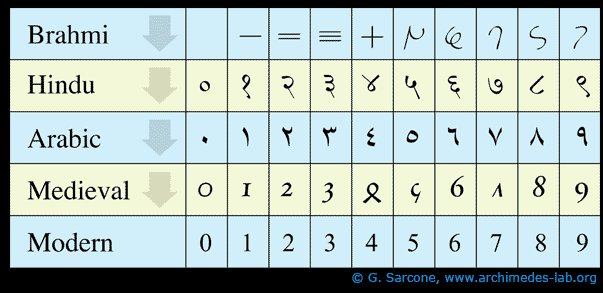
Where did our numerical symbols come from?
The shape of the zero was very clever indeed. When you draw it...it starts as nothing, becomes a point and then takes a shape and then the point returns to nothing, the point at which it came. The numerical shape returns to itself, returns the shape of zero, returns to nothing.
Now, I find it confusing that eight uses the zero doubled up. That number really should have been another symbol.
I find it more confusing that the number ten, twenty, and so on use the number zero at all. There is no zero involved in ten or twenty. There is a one involved in ten. One row of ten. There is a two involved in twenty. Two rows of ten. But why zero?
Then we have infiniti. The horizontal figure eight. This makes sense as it is zero. It is nothing, becoming something and returning to nothing again. But because it is infinite, it does it again. Like a cycle. This makes a lot of sense.
So, who was behind the symbol of zero and infiniti and who was behind the symbol of eight and ten, and twenty, and so on?
Well, as it turns out the symbol we use today for zero came from the Hindu symbol of zero. This is interesting, because their concept of nothingness is still relevant today, especially given the new developments of what nothing means in quantum physics, in the true reality of nature.
Hindus only, within the context of Indo-European, have consistently used a zero.
But we can see that the Hindus did not use the two-zero format for the eight originally. That evolved later during Medieval times. I have to say that was a mistake. The symbol doesn't make sense.
What about ten, twenty and so forth?
Even though it doesn't make sense to me to use a zero, because there is no zero in the number quantity, of course this makes sense so that place values are used and therefore we can write any number using just ten symbols.
But it may have been better to isolate zero as its own symbol, and use a different symbol for ten, twenty. Perhaps like this 1~ or 2~ to mean ten and twenty. 11~ would mean one hundred and ten.
I just don't like the combination of something and nothing I guess. But, the place value was an important step.
What about infiniti? The symbol apparently came to us by John Mallis in 1655.
Wallis did not explain his choice of this symbol, but it has been conjectured to be a variant form of a Roman numeral for 1,000 (originally CIƆ, also CƆ), which was sometimes used to mean "many", or of the Greek letter ω (omega), the last letter in the Greek alphabet.(wiki)
How did Morality happen?
Wednesday, December 10, 2014
Is Consciousness Inevitable?
When we look at energy we see it runs toward entropy and likes to take the fastest path there. So, from that we have determined that energy goes into order and higher organization in fact to reach the fastest path to entropy. More energy will be used up.
However- this seems to mean that high organization of particles is inevitable then. Though you can say this accident happen or that random thing...it seems eventually the higher organization will occur. Then, Consciousness occurs in this higher organization of things...consciousness is like a by product of this higher order of particles....and it seems inevitable to me because nature goes from random to non-random and chaos to order and because nature keeps moving forward building upon itself and is persisting toward the fastest path to entropy. But then it is also inevitable. So, my question now is on one hand consciousness seems inevitable and on the other hand there are many 'accidents or random things that occur' before it happens. So it is like an inevitable accident?
Or perhaps the game is set up to allow for random and accidents, but in the end consciousness will eventually prevail.
Sunday, December 7, 2014
Are morals independent or absolute or what?
Morals don't exist for an individual. They are a Collective. Just like particles interacting with the environment do so as a collective. Then they conform.
Morality and ethics are a collective. If you take any group you look at you cannot then look at it with you on it from an external force onto an inward one. You have to see how the people in the group feel and think . From the inside to the inside. If those people are feeling oppressed or hurt or they feel pain about this sacrificing of children then for that group it is not good. If no one in the group had any feelings or care about a sacrifice of a child, even the child itself then is it morally wrong for the group? If they were say robots with no care of their death? For them then that would not be immoral. But that is because morality is contingent upon the collective. Nature works as a collective.
I then came across this article which seems to think somewhat like I mentioned:
"Law instead follows from collective behavior, as do things that flow from it, such as logic and mathematics. The reason our minds can anticipate and master what the physical world does is not because we are geniuses but because nature facilitates understanding by organizing itself and generating law." -http://www.physicscentral.com/explore/writers/laughlin.cfm
I would add this law comes from the collective, how the parts work together and this is really how morals and ethics evolve as well.
Of course this is Laughlin who Kruass criticized, but I agree with Laughlin here.
As a mother Bonobo looks at her baby, she follows her instincts and her compassion and the level of teaching of care giving from her small community. She knows nothing of science. She is merely following her emotions and level of reason.
As an outside judgment of humans we can look at them and judge, but they are judgers of their own culture and own behavior. What they have deemed acceptable will pass and what is not will not in their group. That is their moral and ethic code.
Monday, November 24, 2014
Water, Tree of Life, Bible, Science, Darwin, Indians
What I am saying is that there is a difference to being narrow in your view of things, and open in your view of things. There is a difference in being blinded by your own arrogance and open to understanding.
Humans don't have all the answers and might not be able to find them all. Our minds can only understand and perceive so much.
For myself I don't take the view so black and white as you. In my opinion you are superficially looking at faiths of the world like most and therefore seeing contradictions and so they are all wrong.
I have two comments on that.
If you look at the words of the spiritual leaders and not the mumo-jumbo (Buddha, Hindu Guru, Kabbalist, Christ, Rumi) you find a lot of similarity. There is a common thread of oneness of everything, selflessness, compassion, love, harmony, denial of self, and many more commonalities.
(In fact much of what the ancient Indian Spiritualist and Kabbalist and Sufist taught are showing to be possibly accurate by modern science from big bang, to worm holes, to the holographic universe, to everything literally being one though it appears separate, to the wholeness of all, to it all coming from nothing -which should be understood as a dynamic eternal nothingness not in the sense most think of it).
The geography, language, rituals, superstitions, clothing, dogma, and supernatural explanations are all just lines to make boxes for everyone to fit into. This is the superficial mumbo jumbo and was not taught by the spiritual leaders.
There is an old Indian story:
There are six people in a dark room and one moves to the center to hit an object. He says, "It is a long bumpy thing with slim at the end." Another man moves to the center and says, "No, it is large and wide and leathery." The other man comes to the center and says, "No, it is short and furry and soft." The other man says, "No, it is like five rocks sitting on the sand." The next man says, "No, it is beating thump thump." The last man says, "No, it is flappy, and rounded and soft."
Then, the lights turn on and they see they have all found different parts to the same whole ---an elephant.
FYI: Ancient people were capable of figuring out all kinds of things. The Mayans and Egyptians both had highly sophisticated understanding of the cosmos and the human body. Further since these ancient peoples of the world lived in nature constantly, not in front of computers or TVs or phones, they were not disconnected like many of us today and so could understand nature in ways that would evade us.
Sunday, November 23, 2014
Fairies, God, Nature, Spirit, Connection
There are actually thousands of scriptures from around the ancient world about unicorns and fairies.
The dominant religions in Europe before Christianity took over were full of fairies. As well as other ancient religions around the world with almost identical myths (although different NAMES for what were essentially fairies).
The same case that is made for the existence of god, could be made for the existence of fairies.
And if god is in reference only to our personal needs, and only dwells within us? Than it's not god, it's just some psychological construct.
The Response:
Frankly, I don't think much of what u r referring to is myth. I call it legend. Most stories are embedded in some form of fact, something that happened and a story emerges from there. There probably were some kind of horses with one horn on their head which is how the stories may have started. There are fossils of one horned horses actually. Even trolls and leprechauns may have an actual link to a real people which was shown on the discovery channel. A very short species.
Not sure what u mean by only our personnel needs and something within us. I would't agree that if that is all it is then its merely psychological. But to me, "god" is something that is used to describe what is within all living things and even non-living things, that connects everything to itself and manifests in all living things. Is everything and nothing.
I don't think the material world is real at all, but an illusion.
And I think nature is far more interesting than most of you give it credit for, and doesn't have to make sense to us, or be measured by us or dissected by us to be.
I think a connection to something allows u to understand it in a way mere measurements alone cannot. I can dissect ur brain, but that tells me nothing of how well you spoke English or your mathematical skill. When I am connected to u, get to know u then I learn these things. Scientists in the past failed to see how clever great apes were by mere measurements. It was three women who dared to named their apes and connect to them that learned and showed everyone how amazing they really were.
People of the past may not have the sophisticated tools we have today, the computers and fancy gizmos that allow such precise measurements. But they were connected to nature in a way many of us fail today.
Connecting allows for intuitive truth, which is why Einstein rightly understood SR even though no one understood how and why he would come up with it.
Saturday, November 22, 2014
Why former Christians have the worst understanding of the scriptures
This is in response to a few misunderstood scriptures also taken out of context by a former fundamentalist.
On when Christ spoke about the fig tree:
U don't understand that the fig tree is a symbol of bearing fruit and not bearing fruit. That what you are in your heart is what you bear. And if your heart is fruitless, it may always be fruitless.
U really don't get anything that was said, wow. I'm all for your mentioned scientists, but you should try to understand the words in context of when and how they were written like all words.
On Europe not washing their hands and dying. Why didn't god warn them to wash hands:
Matthew 15:
“Why don’t your disciples obey what our ancestors taught us to do? They don’t even wash their hands before they eat. These pharisees wanted to know why Jesus did not do this and therefore we can conclude they did. They were taught this in the Levitical laws, which by your fundamental upbringing you certainly have missed. Was it god? Maybe not...but the Jewish people weren't stupid.
It was Europe, who rejected Jewish teachings who suffered from the above. God's plan? No. But rejection of what was already taught.
On all the mixing of Leviticus prohibited:
What harm could it bring to mix grains? Grains have been known to overgrow one another and then destroy the weaker gene. This makes one grain extinct.
The sanitation of today was different from then. Pig and shrimp did kill. They are bottom dwellers, eating anything. It is unsanitary.
Linen and wool is not because of fashion. One is made from animal and the other of plant. Much of the mixing (of various things in the laws) could be said to symbolize mixing of faiths or relating to the story of Cain and Abel where one brought wool and the other plant...but practically Jewish people had reasons for things and many times these have a scientific correlation or moral correlation (or at least what was moral for the time).
The passage has to do with SEWING the two together, not wearing the two together. It is like saying what nature has produced, I will make better. And what a wonderful job man has done.
Can we say Factory Farming.
The stories in Genesis don't belong to Christians. They are Mesopotamian stories. Egyptians, Assyrians, Sumerians and Hebrews all had them. People didn't tell truths in fact, fact, fact, fact format like you are used to today.
You have to understand HOW they wrote.
Truths are told, though something is not factual.
FYI: Most of the Genesis account can be found in Mesopotamia from the possible Tower of Babel, to the possible Garden of Eden. Stories began because something actually did happen and they wanted to convey the truth of what happened.
Also- images and pictures are a very important literary device. The picture you form in your head when you read Tree of Life is very interesting and can be understood even by a child. Do you see the tree? Now, go read Darwin's Origin of the Species. "
Nothing is an Accident?
This is interesting, because I agree with much of what he says, but then I'm not sure how he is concluding because of Higgs, that means everything is an accident. We don't know.
We don't really know if there is something on the other side of big bang and time pulling the strings. If how this entity works is through randomness and accidents or intentional accidents or hands-off.
But let us say for the sake of argument that it is accidental...that doesn't mean it is not purposeful.
We think of things in terms of intentions because our minds work that way, our space-time physical forms are trained that way.
But what if accidents are purposeful?
Eventually something will come from the nothing, and given enough time there will be life and eventually life that will have a higher intellect which can draw meaning.
Eventually there will be meaning from every accident and from every accident something will happen. Sometimes this something survives and sometimes not.
Whatever path we choose will also derive meaning.
So, even if everything we know is accidental (as we define intent) so what? Meaning is still inevitable. And if time is an illusion and not linear, if reality is past-present-future as one. If reality is really such that everything is one....then the ending is the beginning...the beginning the ending. The meaning was from the beginning too.
And this says nothing of how spiritual energy works. Perhaps the spirit doesn't have intentions, but simply is.
And what about Nothing? Was it accidental? Did it always exist?
We really had two options for most people: It all came from nothing or something eternal. For myself, I always saw a third option of an eternal nothingness.
This is what I think best describes from where it all came.
But then what is nothingness? Does it retain any order? Any information? Does it have mass? I think we have established yes in QP, right. Does it retain conscious energy? What kind of energy is it?
Wednesday, November 12, 2014
Compassion and Evolution-What do you think?
But I am very affectionate and loving and compassionate to him and so in time, he has begun to exhibit these traits in return. The more I kiss him or hug him, the more he reciprocates. But if he is startled outside he reverts back to agrees ion with me for a moment. So, he is capable of both.
But what will he be depends on his environment.
I have seen a study on television where when you are compassionate to another human being, that part of their brain actually goes on and developes more. You even develop yours more the more you use it.
So, compassion is defiantly something, in my opinion, something that can be taught and is carried on by living organisms exhibiting this trait to others.
Not just a born with it and so you got it kind of thing.
So, in this very symbiotic sense is where the evolution of compassion takes place, I think.
So- that is why in my opinion religion has played a big part in this evolution of compassion.
Yes, human beings have evolved the capacity to be violent and also to be kind, just like most animals.
But what traits persist and grow and evolve further?
Evolution is a participatory natural process in my opinion. We don't sit on the side lines and everything just happens to us. We are contributing to our own evolution and this is a very important part for people to understand.
What you put in the mixing pot is going to come out of it.
This is where religion or culture plays a very instrumental part of morals or compassion in my opinion, continuing to evolve and hopefully for the better.
Any animal can show meanness or kindness. Chicken fights is an environment that supports violence and so the chickens become more violent. Chickens in small spaces even pluck each other to death.
Kinda like children misbehave when in small spaces.
So our environment, the non-living environment as well as the living environment, which includes the consciousness there, effects the evolutional progression.
Culture is a part of all animals consciousness in my opinion.
Religion is a part of human's consciousness, and is another aspect of culture.
So, we have to consider both when we consider compassion and the effects both have played.
Saturday, November 8, 2014
How is God in us?
http://www.telegraph.co.uk/comment/columnists/christopherhowse/7379255/How-can-God-be-inside-us.html
My views are such as this:
God is everywhere, every when, and everything, nowhere, no when, and nothing. When we start to ask questions like "where" is God, we begin to put God into a space-time physical description which God is not. God is not in one location, the spirit is in all locations and since it is no thing, it is in no locations by all physical definitions.
God, in my view, is very much in the rock as well as in a human being. It is just that the human being can be aware of God in itself and its connectedness to the whole and the rock is not aware. This is because God is a breathing interconnected spirit much like a web. The spirit breathing within everything, sustaining everything. The same fundamental energy of nothingness is within the rock and is within us.
All this physical world is within what I would call the "water" or God. The "water" is this spirit and every Thing is floating around in this "water", seeing its separateness. It is all made up of this fundamental water which for all physical definitions is nothing. It is all sustained by this water since it exists within it.
Our brains are like nets fishermen use to catch fish. We catch fish and see this physical phenomenon and think this is the real, this physical thing we eat. But we miss all the water passing through our nets, the actual spirit sustaining us and making us and connecting us to everything else. In fact we are this water too but temporarily have taken the illusionary form of a net. The more we attach ourselves to this net, the more we think we are the net when in fact we are not.
How is God in us? The water is passing through us all the time already, as it is all things, all the time, in all places. The question is are you aware or conscious of the filling? Are you awakened?
The 5 elementals of true religion
The Self, indeed, is below. It is above. It is behind. It is before.
It is to the south. It is to the north. The Self, indeed, is all this.
Verily, he who sees this, reflects on this, and understands this delights
in the Self, sports with the Self, rejoices in the Self, revels in the
Self. Even while living in the body he becomes a self-ruler. He wields
unlimited freedom in all the worlds. But those who think differently from
this have others for their rulers; they live in perishable worlds. They
have no freedom at all in the worlds.
Hinduism. Chandogya Upanishad 7.25.2
Judaism. Talmud, Sota 21b
"All states are without self." -Buddhism Dhammapada 277-79
To me, this reminds me of looking at everything through the eyes of evolution. We
think this is a cat or frog, but in fact we were all something else before and will become something new in the future. Lines we draw to define this or that are fleeting and not very real, for the real is that we are all connected and not divided,
not this or that but always in-between. To understand in the definition of a self, whatever form that takes, we are limiting our own understanding is grand.
Our goal should not be to enhance the self, but as Christ said to deny the self and become one with the Father. Through this, we understand our oneness with everything, with God -the all pervading spirit that is everything. We then unite with this God and with our true form. Divisions then disappear. The illusion of the physical crumples.
person who is always concerned with himself or herself, is trapped in "the ego-cage of 'I', 'me' and 'mine.'" Consequently, he can neither realize his own true self nor relate to Ultimate Reality. From a Hindu perspective, denying "I," "me," and "mine" is in fact a way to find the true "I" that is transcendent and one with Reality. In the Western per- spective it is a way to recover the true self, which is loving and comp- assionate, having been created in the image of God. Both perspectives affirm the paradox that "he who loves his life loses it, and he who hates his life will keep it." For more on this paradox, see Reversal and Restoration, pp. 544-50. Buddhism also teaches that the path to the religious goal requires one to deny the self and all egoistic grasping. But it goes further, grounding the practice of self-denial on the ontological statement that any form of a self is unreal. Buddhism is most sensitive to the insight that self-denial, when done for the purpose of seeking unity with an Abso- lute Self or God, can become subtly perverted into a form of pride and self-affirmation. Total self-denial should therefore dispense even with the goal of a transcendent Self. There is no self, either on earth or in heaven; all forms are transient, subject to birth and death. A number of texts explaining this doctrine of No-self (anatta) are collected here: more may be found under Formless, Emptiness, Mystery, pp. 85-92 and Orig- inal Mind, No-mind, pp. 217-23. He who has no thought of "I" and "mine" whatever towards his mind and body, he who grieves not for that which he has not, he is, indeed, called a bhikkhu. Buddhism. Dhammapada 367 They are forever free who renounce all selfish desires and break away from the ego-cage of "I," "me," and "mine" to be united with the Lord. Attain to this, and pass from death to immortality. Hinduism. Bhagavad Gita 2.71
Dhammapada 367: Cf. Madhyamakavatara 3, p. 412; Diamond Sutra 14, p. 888. Bhagavad Gita 2.71: Cf. Bhagavad Gita 5.10-12, p 774; Maitri Upanishad 3.2, p. 412; Srimad Bhagavatam 11.4, p. 412; Katha Upanishad 3.13, p. 840.
If any man would come after me, let him deny himself and take up his cross and follow me. For whoever would save his life will lose it; and whoever loses his life for my sake and the gospel's will save it. Christianity. Mark 8.34-36 Truly, truly, I say to you, unless a grain of wheat falls into the earth and dies, it remains alone; but if it dies, it bears much fruit. He who loves his life loses it, and he who hates his life in this world will keep it for eternal life. Christianity. John 12.24-25 O Son of Man! If you love Me, turn away from yourself; and if you seek My pleasure, regard not your own; that you may die in Me and I may eternally live in you. Baha'i Faith. Hidden Words of Baha'u'llah, Arabic 7 The Man of the Way wins no fame, The highest virtue wins no gain, The Great Man has no self. Taoism. Chuang Tzu 17 Torah abides only with him who regards himself as nothing. Judaism. Talmud, Sota 21b Where egoism exists, Thou art not experienced, Where Thou art, is not egoism. You who are learned, expound in your mind this inexpressible proposition. Sikhism. Adi Granth, Maru-ki-Var, M.1, p. 1092 Yen Yan asked about perfect virtue. The Master said, "To subdue one's self and return to propriety is perfect virtue. If a man can for one day subdue himself and return to propriety, all under heaven will ascribe per- fect virtue to him." Confucianism. Analects 12.1.1
Mark 8.34-36: To bear the cross and sacrifice oneself for others, one must first deny the self and its desires. Cf. Matthew 10.24-25, p. 821; 23.12, p. 545; Luke 14.26, p. 959; Philippians 2.6-11, p. 616; Romans 8.9-17, p. 576; Acts 6.8-7.60, pp. 887f. John 12.24-25: Cf. Matthew 16.24-25, p. 875. Sota 21b: Cf. Abot 2.4, p. 771. Maru-ki-Var, M.1: Cf. Diamond Sutra 9, p. 933.
The pursuit of learning is to increase day after day. The pursuit of Tao is to decrease day after day. It is to decrease and further decrease until one reaches the point of taking no action. No action is undertaken, and yet nothing is left undone. Taoism. Tao Te Ching 48 If you do not deny yourself completely, restoration through indemnity is impossible. Indemnity conditions can be realized only by completely deny- ing yourself. The standard of absolute denial should be established tow- ard the individual, the family, the race, the world, the cosmos, and God. Unification Church. Sun Myung Moon, 4-3-83 Would one die while living, thus crossing the ocean of existence. Sikhism. Adi Granth, Suhi Chhant, M.5, p. 777 In the evening do not expect [to live till] morning, and in the morning do not expect evening. Prepare as long as you are in good health for sick- ness, and so long as you are alive for death. Islam. Forty Hadith of an-Nawawi 40 I have been crucified with Christ; it is no longer I who live, but Christ who lives in me; and the life I now live in the flesh I live by faith in the Son of God, who loved me and gave himself for me. Christianity. Bible, Galatians 2.20
Tao Te Ching 48: Cf. Tao Te Ching 16, p. 840; 19, p. 294; 22, p. 549; Chuang Tzu 6, p. 584. Sun Myung Moon, 4-3-83: Indemnity and Self-denial are necessary because of the Fall; see Divine Principle I.3.2.1, p. 547n. Cf. Luke 14.26, p. 959. Galatians 2.20: Cf. Romans 8.9-17, p. 576; 12.1, p. 754; Ephesians 2.8-10, p. 756. Mumonkan 46: The issue is grasping and dependence upon the body and sense experience, and fear of going beyond its limits. See Seng Ts'an, p. 223.
Remember, those who fear death shall not escape it, and those who aspire to immortality shall not achieve it. Islam (Shiite). Nahjul Balagha, Khutba 43 Seek not for life on earth or in heaven. Thirst for life is delusion. Knowing life to be transitory, wake up from this dream of ignorance and strive to attain knowledge and freedom. Hinduism. Srimad Bhagavatam 11.13 You, who sit on the top of a hundred-foot pole, although you have entered the Way you are not yet genuine. Proceed on from the top of the pole, and you will show your whole body in the ten directions. Mumon's Comment: If you go on further and turn your body about, no place is left where you are not the master. But even so, tell me, how will you go on further from the top of a hundred-foot pole? Eh? Buddhism. Mumonkan 46 A monk asked Baso, "What is the Buddha?" Baso answered, "No mind, no Buddha." Buddhism. Mumonkan 33 "All states are without self." When one sees this in wisdom, then he be- comes dispassionate towards the painful. This is the path to purity. Buddhism. Dhammapada 277-79 "The body, brethren, is not the self. If body were the self, this body would not be subject to sickness, and one could say of body, 'Let my body be thus; let my body not be thus.' But inasmuch as body is not the self, that is why body is subject to sickness, and one cannot say of body, 'Let my body be thus; let my body not be thus.' "Feeling is not the self. If feeling were the self, then feeling would not be subject to sickness, and one could say of feeling, 'Let my feeling be thus; let my feeling not be thus.' "Likewise perception... the [volitional] activities... and consc- iousness are not the self. If consciousness were the self, then con- sciousness would not be subject to sickness, and one could say of consciousness, 'Let my consciousness be thus; let my consciousness not be thus'; but inasmuch as consciousness is not the self, that is why consciousness is subject to sickness, and that is why one cannot say of consciousness, 'Let my consciousness be thus; let my consciousness not be thus.' "Now what do you think, brethren, is body permanent or impermanent?" "Impermanent, Lord." "And is the impermanent painful or pleasant?" "Painful, Lord." "Then what is impermanent, painful, and unstable by nature, is it fitting to consider as, 'this is mine, this am I, this is my self'?" "Surely not, Lord." "So also is it with feeling, perception, the activities, and consc- iousness. Therefore, brethren, every body whatever, be it past, future, or present, be it inward or outward, gross or subtle, lowly or eminent, far or near--every body should be thus regarded, as it really is, by right insight--'this is not mine; this am not I; this is not my self.' "Every feeling whatever, every perception whatever, all activities whatsoever, every consciousness whatever [must likewise be so regarded]. "Thus perceiving, brethren, the well-taught noble disciple feels disgust for body, feels disgust for feeling, for perception, for the acti- vities, for consciousness. Feeling disgust he is repelled; being repell- ed, he is freed; knowledge arises that in the freed is emancipation; so he knows, 'destroyed is rebirth; lived is the religious life; done is my task; for life in these conditions there is no hereafter.'" Buddhism. Samyutta Nikaya iii.68
Mumonkan 33: Implicit in this koan is the instruction to deny not only the self but also any object of attainment--even the Buddha himself; see Sutta Nipata 1072-76, p. 532; 919-920, p. 553; Sutra of Hui Neng 2, p. 90. The third of the Four Noble Truths speaks of the eradication of desire or striving, even striving after enlightenment. Compare Mumonkan 30, p. 116, which asserts the seeming opposite. Dhammapada 277-79: The self is right- ly denied because it truly does not exist; this is the Buddhist teaching on no-self (anatta). See Sutta Nipata 1072-76, p. 532; 919-920, p. 553. Samyutta Nikaya iii.68: Matter (the body), sensation (feelings), cognition (perception), volition (the activities), and the consciousness which de- pends upon them are called the five aggregates (skandhas). The Buddha taught that these aggregates, which are commonly thought to constitute the self, are not the self. They are impermanent and unreal, and so is the self which is thought to consist of them. Cf. Majjhima Nikaya i.142-45, p. 929; Diamond Sutra 14, p. 888; Sutta Nipata 1072-76, p. 532.